
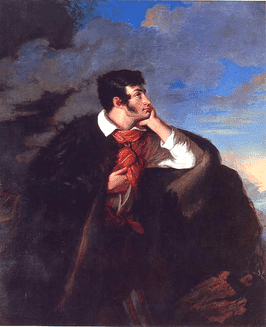
Adam Mickiewicz
12/24/1798 - 11/26/1855
Poem "Oda do młodości" (1820)
Ballady i romanse (1822)
Book "Sonety krymskie" (1826)
Poem "Konrad Wallenrod" (1828)
The Writing "Księgi narodu polskiego i pielgrzymstwa polskiego" (1832)
Epic poem "Pan Tadeusz" (1834)

1798
Born
Adam Mickiewicz was born on the farm Zaoss, near the town of Novogrudok. 3 years before the author was born, these lands belonged to the Commonwealth, and then were annexed to the Russian Empire. Today the territory belongs to Belarus, so residents know about the poet’s work.
17981807—1819
Study
He studied at the Dominican school, founded at the church of St. Michael the Archangel, and there he became interested in literary work. Mickiewicz wrote his first poems as a teenager. The thirst for knowledge and zeal helped to get a state scholarship and went to Vilnius University. At the new faculty, the student began to read antique works in the original, studied foreign languages and attended lectures by eminent teachers.
1807—18191822
Poetry
The first debut book of poems by Adam Mickiewicz appears. The first volume of the author’s works was called “Poetry” and included the famous cycle “Ballads and Poems”. A year later, published the 2nd volume of the publication, which absorbed the poems "Dzyady" and "Grazhina".
18221823
Journey
Miscavige was arrested in the Filomatov Case. He was in prison, but thanks to friends in 1824 he was released into the wild. Six months later, the writer was evicted from the city. He was forced to leave and took a trip to St. Petersburg. Then he visited Odesa, Crimea, Moscow and returned to the Northern capital. The journey took 5 years and brought Mickiewicz an acquaintance with the creative intelligentsia of Russia. Subsequently, he went to Europe and visited Italy, Switzerland, Germany.
18231834
Family
Miscavige found a family. His wife was Tselina Shimanovskaya, the daughter of a pianist whose poet visited salons while in St. Petersburg. 6 children were born in the union.
18341855
End of life
Miscavige went to Constantinople, cherishing plans for the formation of a new organization. Her goal was to unite the French and British in the fight against the Russians in the Crimean War. On the way, he fell ill with cholera, which was the cause of death. The body of Adam Mickiewicz was buried in Paris. In 1890, the remains were moved to Krakow, where they carried out a reburial in the Wawel Cathedral.
1855